Skip to content
LeanSimCorpIndustry problems solved
Explore site
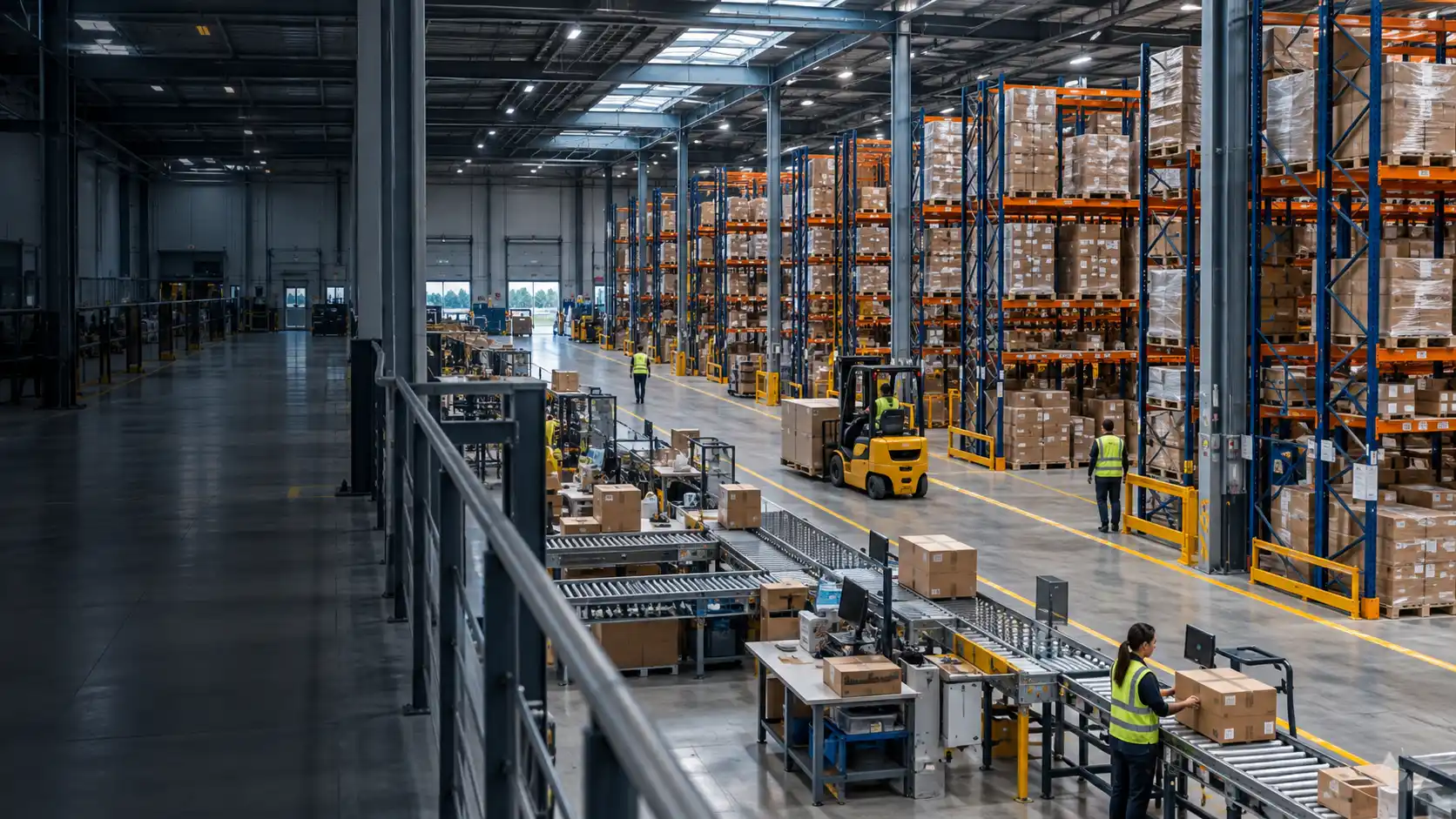
Illustrative warehouse with conveyors, racks and material-handling equipmentAI-generated illustrative operation

Represent the processes, resources and operating rules.

Illustrative model · not a client system

Simulation &
Digital Twin.

Explore the future before committing to it.

Simulation consulting for manufacturing, warehouses and material flow. We build new models, review existing ones and compare operational changes before you invest.

Built around your decision.

The right model, a checked baseline and comparable scenarios—not just a 3D animation.

Understand what
limits performance.

A slow station may be a symptom, not the cause. We model variability, operating rules and shared resources to investigate how delays spread through the system.

  • Trace queues, blocking and idle time
  • Check resource and equipment interactions
  • Test demand peaks and downtime

A credible starting point.

The baseline is checked against known operating records before it is used to evaluate changes.

Compare the options.
Before you invest.

Would another layout, a different fleet size or a new shift pattern help? We compare scenarios using agreed measures and consistent assumptions, so the trade-offs are clear.

  • Layouts, buffers and material flow
  • Staffing, equipment and fleet sizes
  • Schedules and operating rules

Click to compare, or continue scrolling. Illustration only—not a calculated performance result.

A usable model.
A clearer decision.

We agree the deliverables around your question and project scope. Your team receives the evidence and limitations needed to review the decision—not just a model walkthrough.

  • Baseline validation findings
  • Comparable scenarios and recommendations
  • Assumptions and a working model, where scoped
Tell us what you need to decide

Simulation or
digital twin?

A simulation study tests operational decisions. Emulation can test control logic against a virtual system. A digital twin adds a maintained connection to its real-world counterpart. We help establish which approach your decision needs, and what data and integration it requires.

Explore emulation & digital twin

What we bring to your operation.

Model development, validation and scenario studies for interconnected operations. The model is shaped around the decision, not the software.

Simulation project support

Build and validate a model that can support a stated operational decision.

  • FlexSim discrete event simulation
  • Model building & validation

A clearer basis for business decisions.

Review investment before implementation

Compare proposed layouts, fleet sizes and resource changes against the same operating assumptions.

Understand operational risk

Explore queues, downtime, demand peaks and shared-resource interactions that averages can overlook.

Align teams around evidence

Make trade-offs visible and document the model’s limits so engineering and leadership can review the same basis.

From evidence to a usable decision.

  1. Define the decision and model boundary

    Agree the scenarios, operating inputs and measures that will make the study useful.

  2. Build and validate the baseline

    Check model behavior against known operations before using it to evaluate future changes.

  3. Compare options and hand over

    Deliver comparable scenarios, findings and assumptions, with a working model where included in scope.

FlexSim consulting & project support

FlexSim simulation projects and consulting for engineering teams worldwide. Build a new model, review an existing one or compare operational scenarios. Project delivery is separate from our training courses.

New simulation models

Turn process data and operating rules into a model of your production line, warehouse or material-handling system. Agree the decision and validation basis before building.

Existing-model review

Review model logic, inputs and results when a FlexSim project needs a clearer answer. Identify gaps, check assumptions and agree the work needed to make the model useful.

Scenario studies

Compare layouts, capacity, buffers, staffing or fleet options on a consistent basis. See the trade-offs and constraints before committing to equipment or operating changes.

A clear scope. A usable handover.

We agree inputs, assumptions, checkpoints and deliverables with you. Depending on the scope, you receive the model, validation findings, scenario comparisons and recommendations — not just an animation.

Teams in the United States and other international markets can engage our India-based engineers for simulation projects.

If your organization uses an NDA, share it with us for review before sending sensitive drawings or datasets.

The engineering behind the decision.

Simulation consulting and FlexSim project support for manufacturing, warehouses and material flow. Build a new model, review an existing one, or test the next operational decision.

Our approach

Discrete event simulation represents a plant as a sequence of events in time rather than as a set of averages, so blocking, starvation, breakdowns, changeovers and queueing all show up in the result instead of being assumed away. We build these in FlexSim, validate them against a period the plant already knows the answer for, and only then use them to compare options. A model that has not been validated is an opinion with a 3D view attached.

Selecting the right modeling approach

A spreadsheet may be enough for a stable process or an average-capacity estimate. Simulation becomes useful when variation, shared resources, failures and queues interact. We choose the method around the decision, rather than commission a 3D model for every question.

Validating the model

The baseline model is run against a period with known operating records. We compare agreed measures with what happened, investigate discrepancies and document limits before using the model for future scenarios. A realistic animation alone is not evidence that the model represents the operation.

Comparing operational scenarios

Layouts, buffer sizes, fleet sizes, shift patterns, schedules and sequencing rules, each compared on the same basis and against the same demand. The model tends to outlive the question it was built for, which is where a good deal of its value ends up.
What decision comes next?

Tell us what you are planning, what you want to improve and when you need to decide. We’ll discuss the engineering approach, project scope and next steps.