Fleet size
Test vehicle counts against timed requests—not average travel alone.
- Model peak move requests
- Include empty and loaded travel
- Find the fleet that meets demand
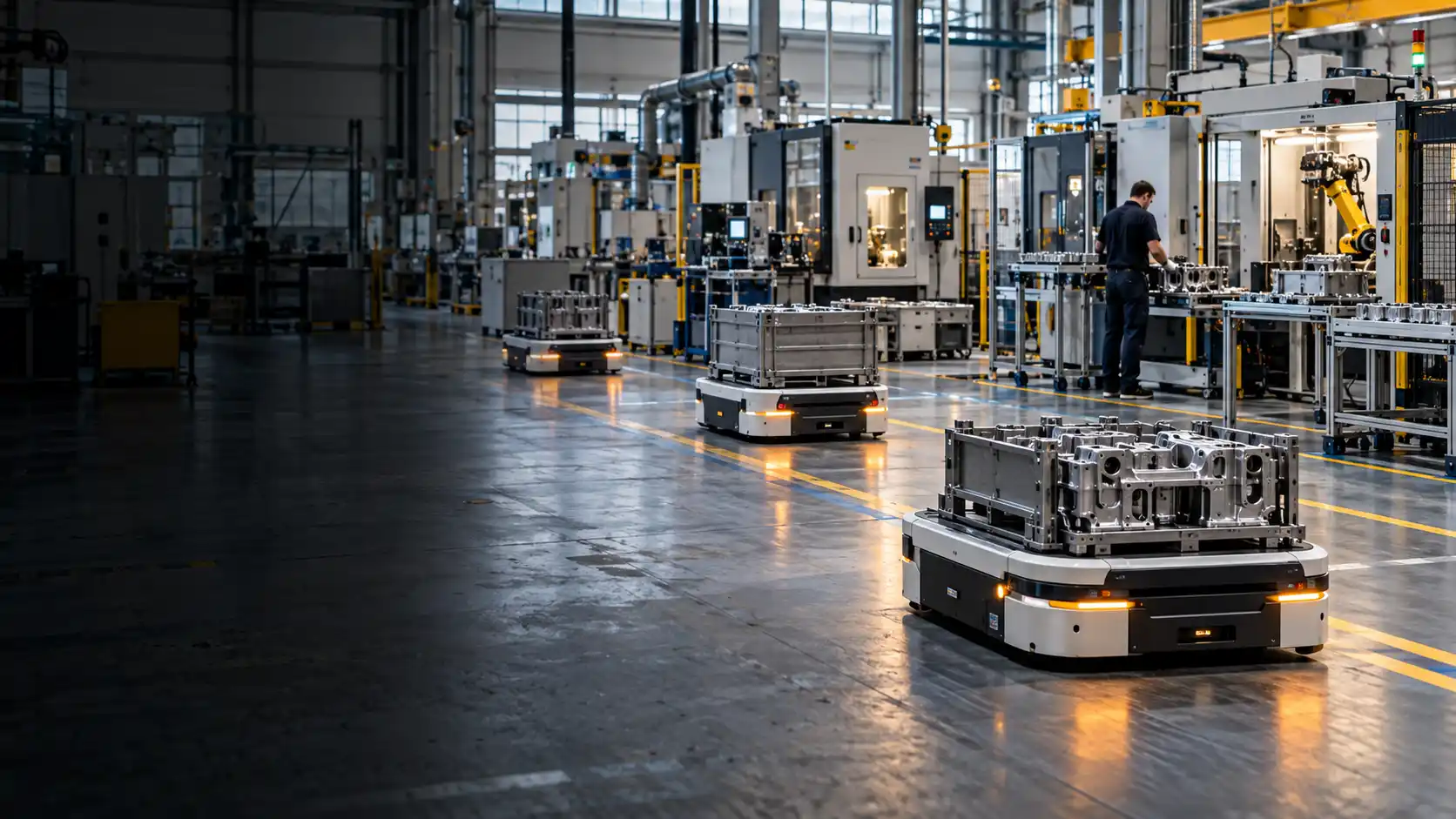
Know the fleet you need. Know the floor it can serve.
Test vehicle count, routes, traffic rules, dispatching, and charging together—before committing to a fleet.
Move counts alone cannot size a fleet. Vehicles wait at junctions, queue for work, and leave service to charge. Explore five challenges using the cards or arrows below.
Fleet size
Traffic conflicts
Charging windows
Dispatch & pickups
Layout ceiling
Test vehicle counts against timed requests—not average travel alone.
Run vehicles together under real traffic and priority rules.
Account for vehicles unavailable while charging.
Compare assignment rules at pickup and drop points.
Find when more vehicles stop increasing completed moves.
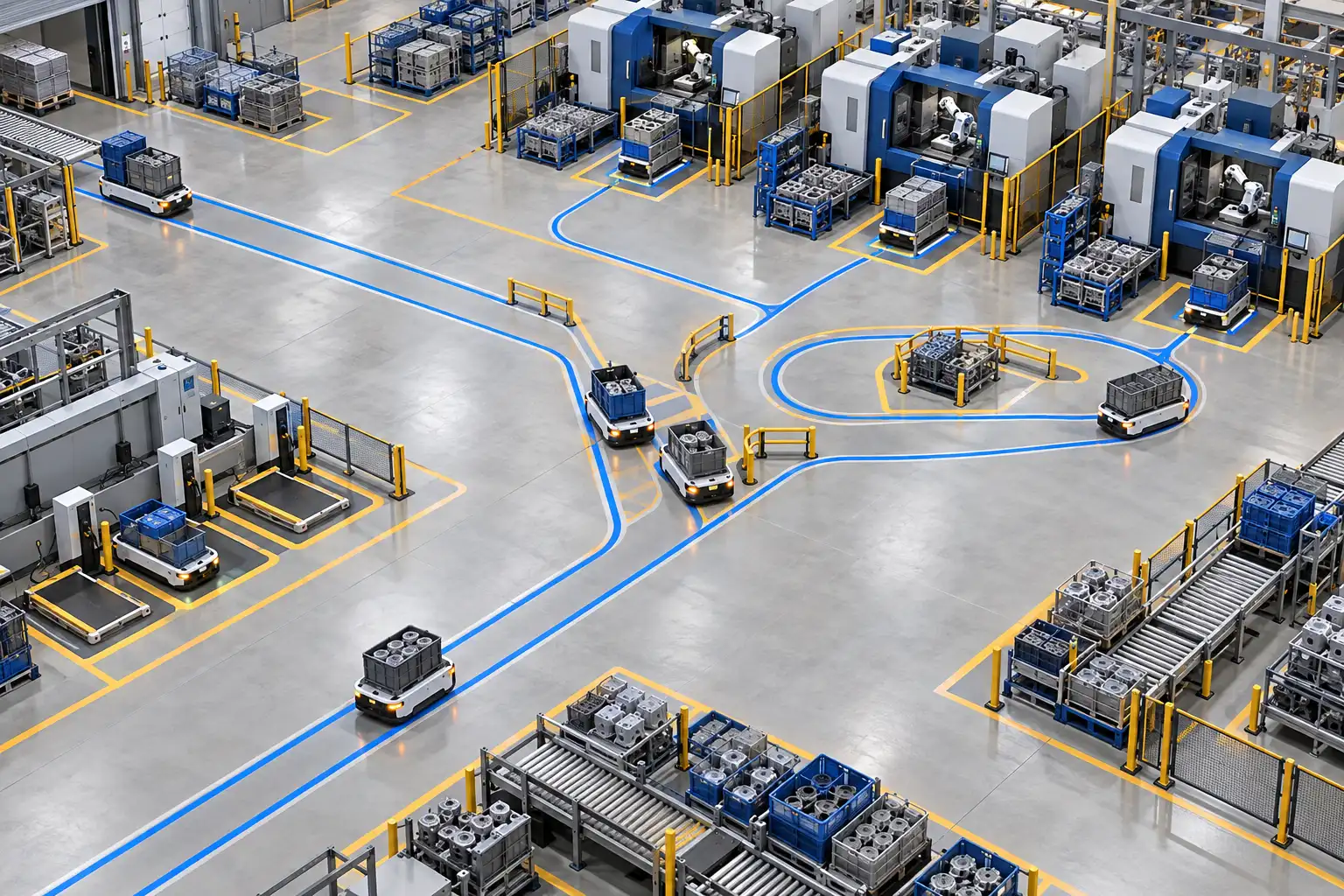
Explore all five challenges · Select a card or use the arrows
A fleet study shows how many vehicles the operation needs—and which operating choices make that number work.
Compare vehicle counts against actual moves, peaks, congestion, and charging.
See where junctions, single-width aisles, or pickup points cause waiting.
Test charger positions and schedules alongside delivery demand.
Compare dispatch and traffic rules by response time and missed moves.
Learn when another vehicle adds useful capacity—and when the layout caps it.
A working simulation model + Scenario comparisons + Engineering recommendations
Test fleet size, charging, dispatch, and traffic rules before ordering vehicles or changing routes. We compare completed moves and response times under your operating demand.
Explore our simulation project supportModel vehicles sharing aisles, junctions, and pickup points under the intended traffic rules. We identify where blocking accumulates and compare routing, priority, or delivery-point changes alongside additional vehicles.
Include charge thresholds, charger positions, charging duration, and the time vehicles leave service. We compare charging policies against the same move requests to see how each changes fleet availability and delivery response.
Increase fleet size in steps to find when congestion limits completed moves. We test alternatives such as passing bays, one-way routes, or extra drop points so the decision distinguishes vehicle shortage from a layout constraint.
We define the move profile and delivery targets, then model vehicles competing for the same paths and handling points. Fleet counts are tested together with layout, charging, and operating rules rather than treating them as independent decisions.
Typical inputs include timed move requests, pickup and drop locations, scaled routes, vehicle speeds and handling times, charging rules, and traffic priorities. The scope identifies which vehicle and controller assumptions must be checked with the project team.
Depending on scope, receive fleet-size comparisons, traffic hotspot analysis, charging and dispatch scenarios, and engineering recommendations. Findings show where another vehicle adds useful capacity and where routes or pickup points become limiting.
With expert simulation consultation.
Tell us the move profile, layout, and fleet options you are considering. We’ll identify what a simulation study should test.