Layout & space
Test how each layout handles everyday movement and peak warehouse demand.
- Compare different layouts
- Find congestion and wasted space
- Test capacity before expanding
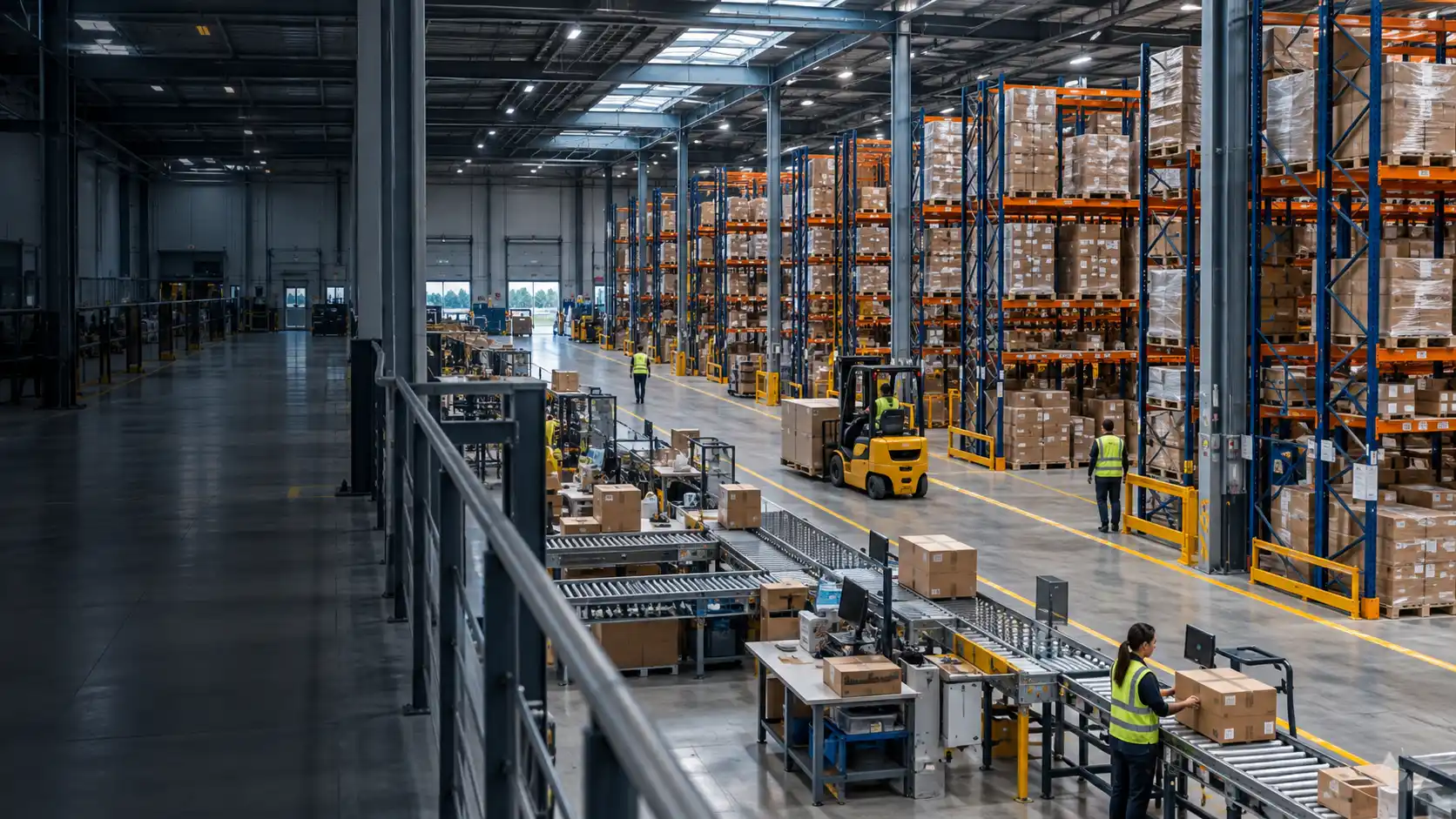
Smarter layouts. Better order flow. Warehouse decisions, tested with simulation software.
We model your operation to compare layouts, resources, and fulfillment strategies before you invest.
Space, stock, people, and orders all affect each other. Explore five challenges and see how simulation helps. Select a card or use the arrows below.
Layout & space
Inventory & replenishment
Order fulfillment
Cost & resources
Capacity & visibility
Test how each layout handles everyday movement and peak warehouse demand.
Test where stock belongs and when replenishment keeps picking moving.
Follow orders through picking, packing, and dispatch to find delays.
Compare staffing, equipment, and shifts against cost and capacity.
Test peak demand and order mix to uncover queues and capacity limits.
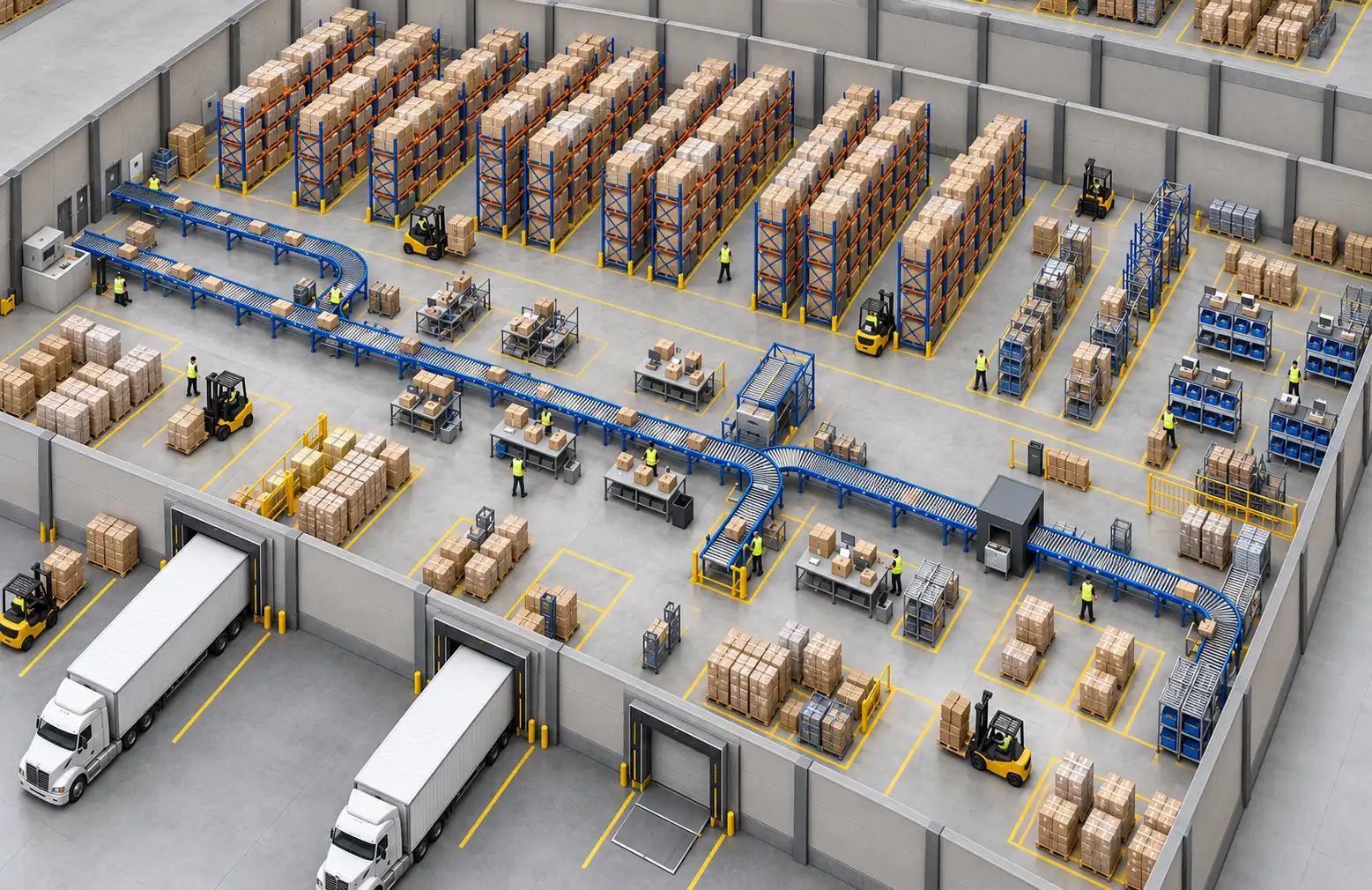
Explore all five challenges · Select a card or use the arrows
Simulation gives your team the evidence to pursue improvements where they matter most.
Get more from your space, people, and equipment by testing how they work together.
Find unnecessary travel, waiting, and resource use before adding more capacity.
Test the changes that help orders move through picking, packing, and dispatch.
Explore peak demand, disruption, and future growth before changes reach the floor.
Back your next investment with scenario comparisons and clear assumptions.
A working simulation model + Scenario comparisons + Engineering recommendations
Planning an expansion or improving an existing warehouse? We test your options before you commit to a layout, equipment, or operating change.
Explore our simulation project supportBefore adding dock doors, test truck arrivals, unloading times, staging space, and available labor together. We model receiving and dispatch to identify where queues form and compare changes to door allocation, schedules, and staffing—so an investment does not simply move the bottleneck.
A mezzanine or additional racking creates storage, but not necessarily capacity. We compare expansion plans with alternative layouts, slotting policies, and replenishment rules under the same demand. See whether receiving, picking, and packing can support the volume you are planning for before committing capital.
Compare batch, zone, wave, and discrete picking using your order profile, including peak periods. The simulation tracks travel, aisle congestion, replenishment, and packing queues to reveal the trade-offs. Use the findings to select an operating strategy that supports your throughput and service targets.
Test shift patterns, labor allocation, forklifts, and other handling resources before adding headcount or equipment. We compare workload, utilization, waiting time, and throughput across scenarios to distinguish a resource shortage from a flow problem and assess the options against your cost assumptions.
Start with the decision you need to make, your target demand, and the options under consideration. We agree the scope and required inputs, such as layout, order lines, process times, and shift schedules. Assumptions are documented and the model is checked against current operations before testing changes.
Depending on the agreed scope, deliverables can include a working simulation model, scenario comparisons, capacity limits, resource analysis, and engineering recommendations. We explain the trade-offs and assumptions behind each option so your team can plan the next investment or operating change. Timing and cost depend on project scope.
With expert simulation consultation.
Tell us the decision you are weighing. We’ll explore how simulation can help.