The real constraint
Test which station change actually raises finished output.
- Recreate the current line
- Measure blocking and starvation
- Test one station change at a time
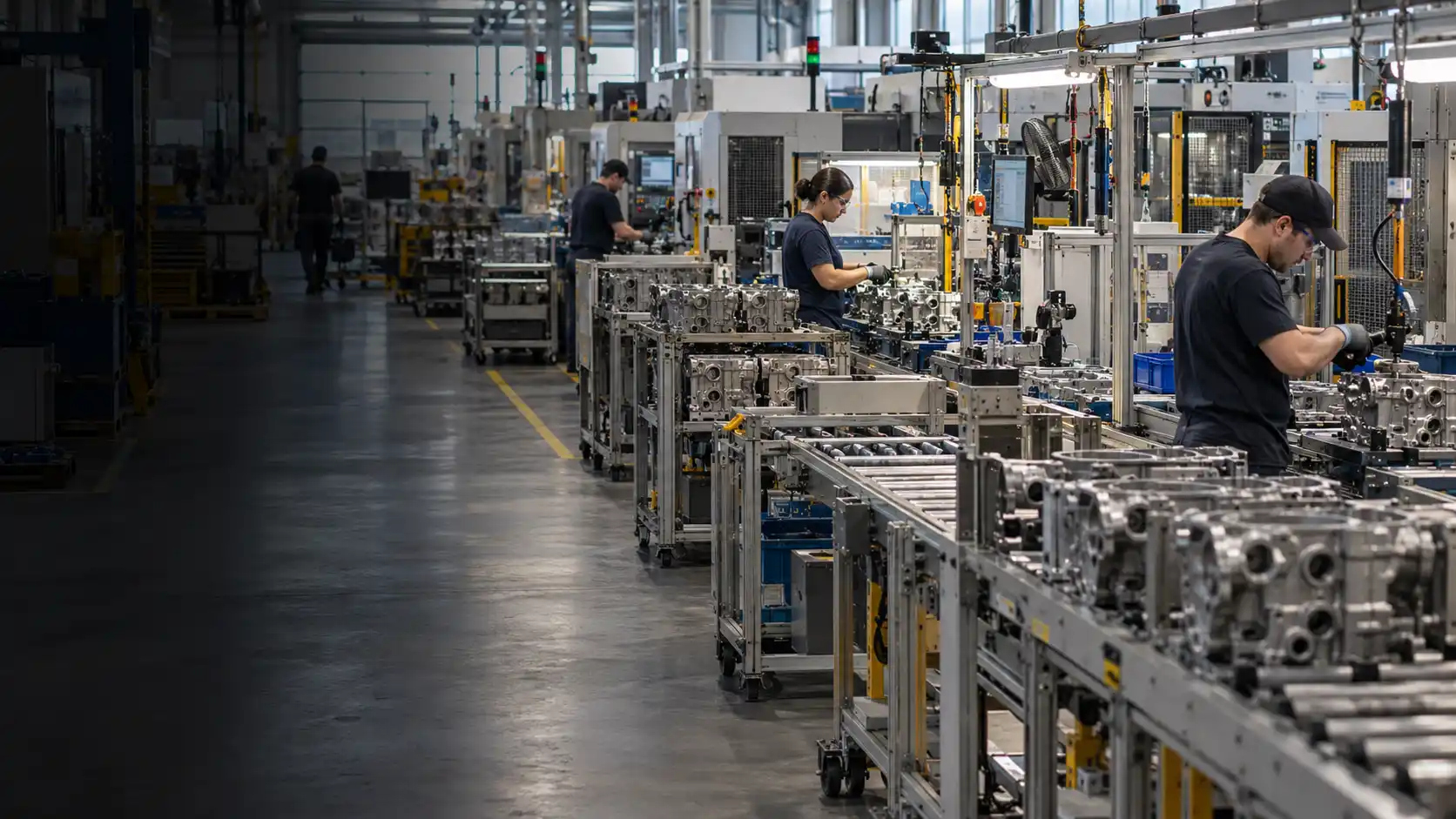
Find what truly limits output. Fix what actually moves it.
We model your line as it runs today, test proposed changes on equal demand, and show which gain survives real variation.
A busy machine, a long queue, and a slow process can each look like the problem. Only a system-wide view shows what is limiting delivered output. Explore five challenges using the cards or arrows below.
The real constraint
Hidden lost time
Buffers & flow
Competing fixes
Next bottleneck
Test which station change actually raises finished output.
Include real interruptions so the model reflects a full shift.
Watch how work-in-process fills and drains between stations.
Give every proposed change the same baseline and demand.
Re-test the improved line to see where the limit moves.
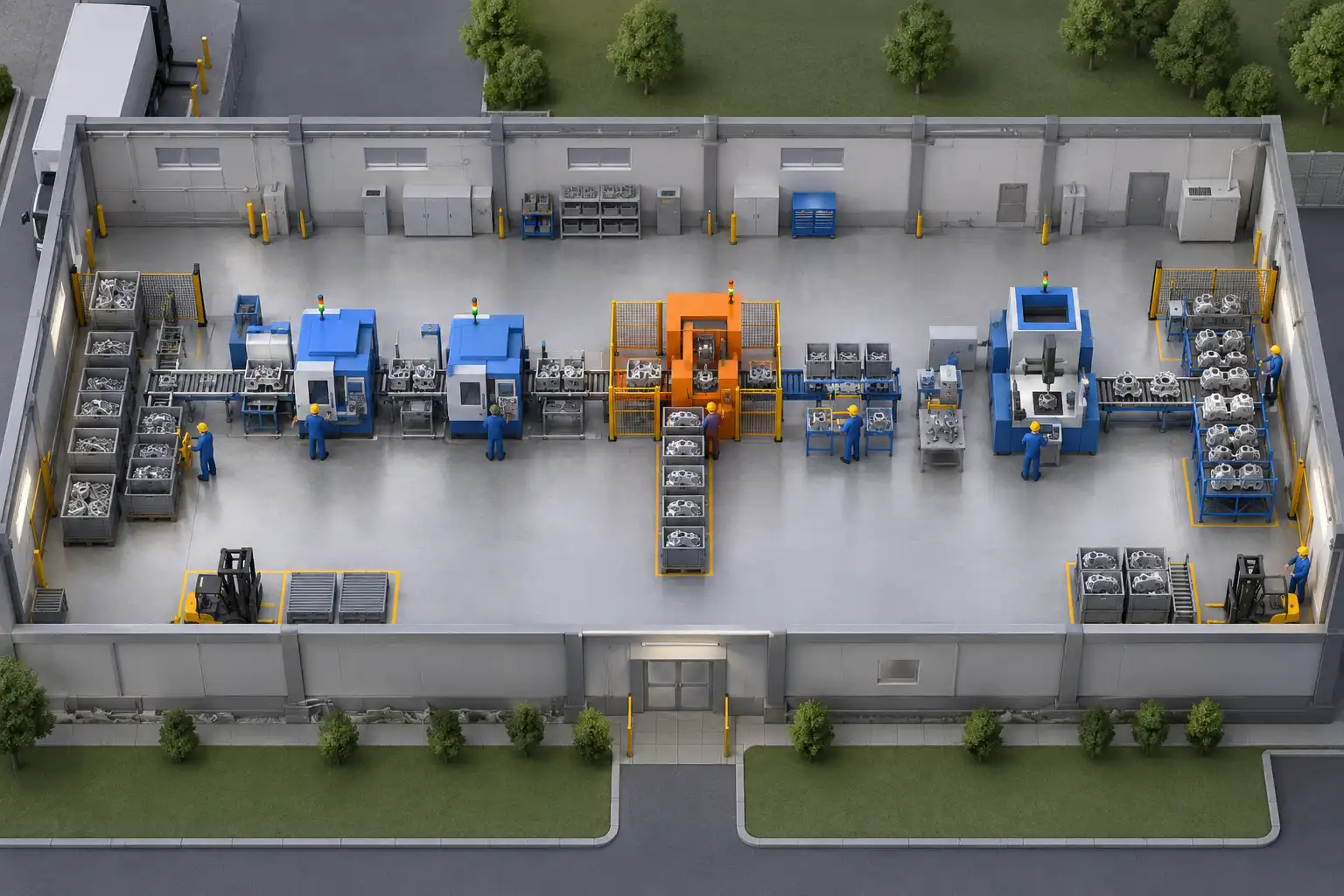
Explore all five challenges · Select a card or use the arrows
A throughput study gives your team evidence about the change that matters—not just a faster-looking machine.
Identify what caps output now, including hidden blocking and starvation.
Compare the delivered output from each change against the same baseline.
See which station or resource becomes limiting once the first is improved.
See how gains hold up through stops, changeovers, and difficult weeks.
Focus effort on changes that raise system output before spending on capacity.
A working simulation model + Scenario comparisons + Engineering recommendations
Turn competing explanations for lost output into comparable improvement options. We test changes against the current line before equipment, labor, or buffers are added.
Explore our simulation project supportBuild a baseline of the line as it runs today, then test each proposed change separately on identical demand. We compare delivered output and resource behavior so your team can prioritize practical improvements without buying equipment to discover its value.
Re-run the improved line to identify the resource that becomes limiting next. We compare the usable headroom of individual and combined changes, helping you decide whether a second improvement is needed to realize the first one's value.
Test improvements with observed stoppages, absence, changeovers, and material delays. We report the variation in delivered output, not just a best-case run, so the proposed action can be judged under the operating conditions it must withstand.
We start with the output gap and the changes your team is considering. Each option is compared with the same baseline and demand, including the option of making no change, so effort is directed at system output rather than one machine's speed.
Typical inputs include cycle-time observations, stop and recovery records, buffer capacities, product mix, shift coverage, changeovers, and rework routes. We check the baseline against current output and waiting behavior.
Depending on scope, receive a baseline model, constraint analysis, scenario comparisons, and prioritized recommendations. Findings distinguish the expected output change from the next bottleneck and show sensitivity to downtime and demand.
With expert simulation consultation.
Tell us where output falls short and which fixes are being considered. We’ll map what a throughput study should test.