Workload & takt
Compare real station work content with the takt the line must meet.
- Map tasks to stations
- Use actual time variation
- Compare cycles against takt
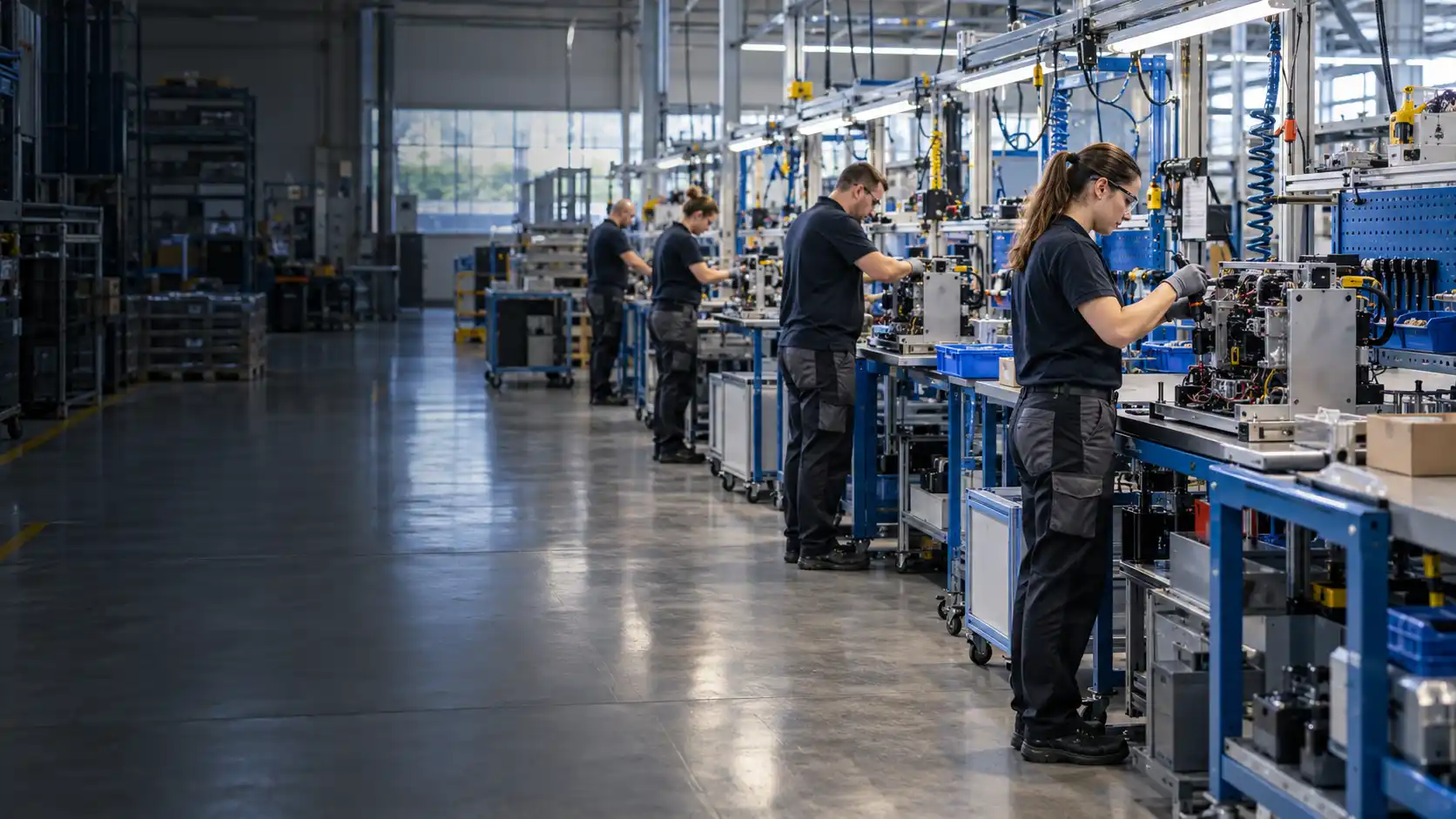
Balance the work. Protect the flow.
Test task assignments, cycle-time variation, operator coverage, and buffers before changing a working line.
A balanced spreadsheet does not guarantee a balanced shift. Cycle times vary, operators share work, and buffers change how delays travel. Explore five challenges using the cards or arrows below.
Workload & takt
Cycle variation
Operator coverage
Buffers & blocking
Product mix
Compare real station work content with the takt the line must meet.
See where variable cycles cause a neighbor to wait.
Include walking, breaks, and shared work in operator plans.
Watch queues fill and stations block or starve.
Test a proposed balance under the product mix you expect.
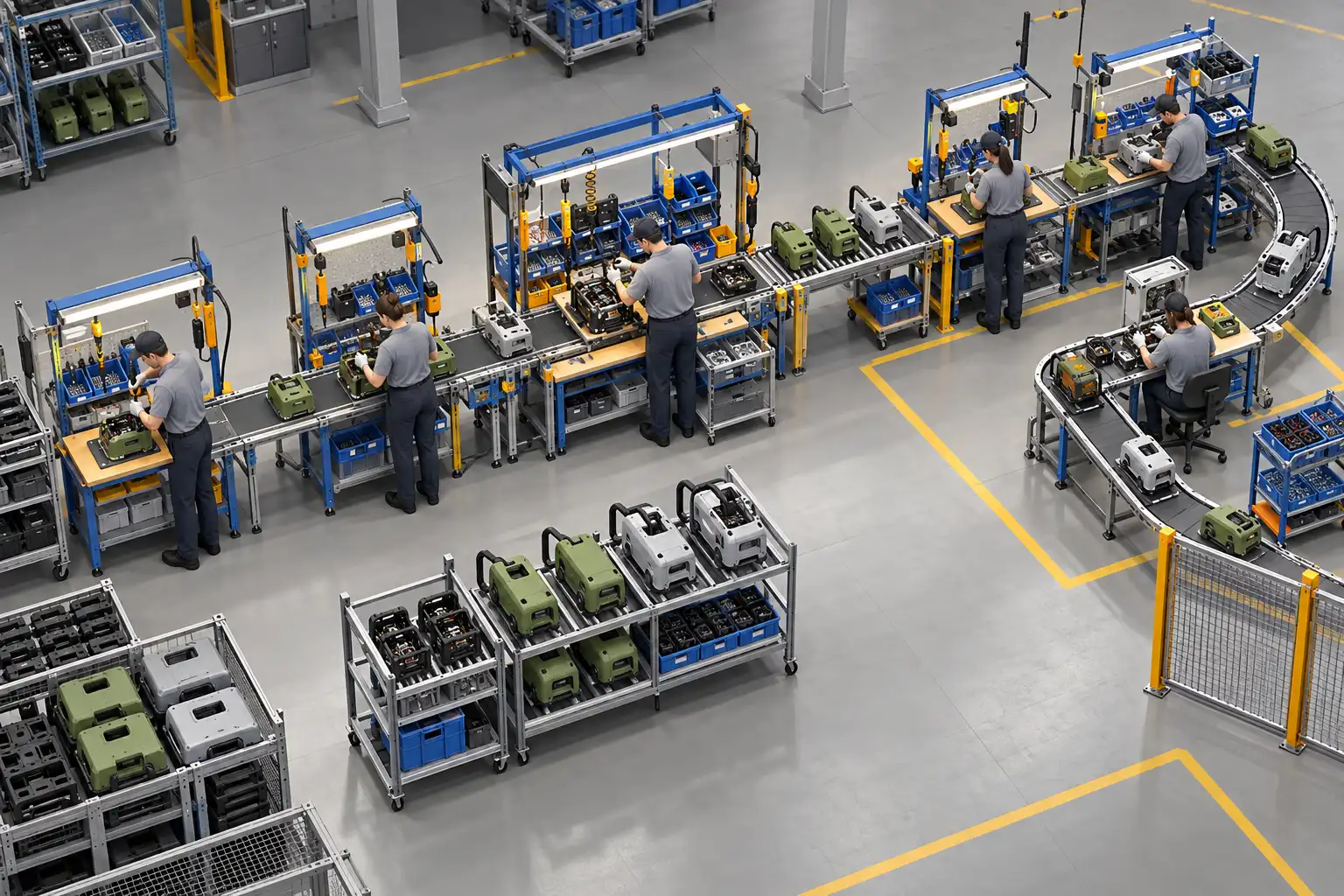
Explore all five challenges · Select a card or use the arrows
A line-balancing study makes the trade-offs visible before tasks are moved and operators are retrained.
Understand where work content sits relative to takt and available time.
Identify where variation starves a station or backs work into its neighbor.
Test rebalancing options on the same demand and cycle-time spread.
Assess coverage and shared work without assuming every cycle is identical.
See whether an improved balance still works when variants change.
A working simulation model + Scenario comparisons + Engineering recommendations
Evaluate task assignments, operator coverage, and buffers before changing an assembly line. We test the proposed balance against takt, cycle variation, and product mix.
Explore our simulation project supportRepresent each station's cycle-time spread and run the line with finite buffers. We measure where work backs up or downstream stations wait, then compare task assignments and buffer changes against the required rate.
Separate the effect of operator variation from the effect of station and buffer design. We test coverage, shared tasks, and walking under the same workload to see which assignment changes improve delivered flow.
Compare a proposed rebalance with alternatives before tasks or stations move. We test delivered rate with variation and changing product mix, then explain the operational trade-offs for your team to weigh against retraining and relocation effort.
We start with the required rate and candidate task or staffing changes. The model tests station interactions over time, including blocking and starvation, so the decision considers the whole line rather than equal average task times alone.
Typical inputs include task content and time distributions, station sequence, takt targets, operator coverage, buffers, quality checks, and variant mix. We agree how walking, rework, and shared tasks should be represented.
Depending on scope, receive station workload and waiting analysis, task-assignment comparisons, and engineering recommendations. Findings show delivered rate against the proposed balance and whether improvements hold across expected product mixes.
With expert simulation consultation.
Tell us the takt, task content, and balance changes you are weighing. We’ll identify what a line study should test.