Crew coverage
Compare crew sizes under the workload of each shift.
- Model real shift demand
- Include interruptions
- Compare staffing options
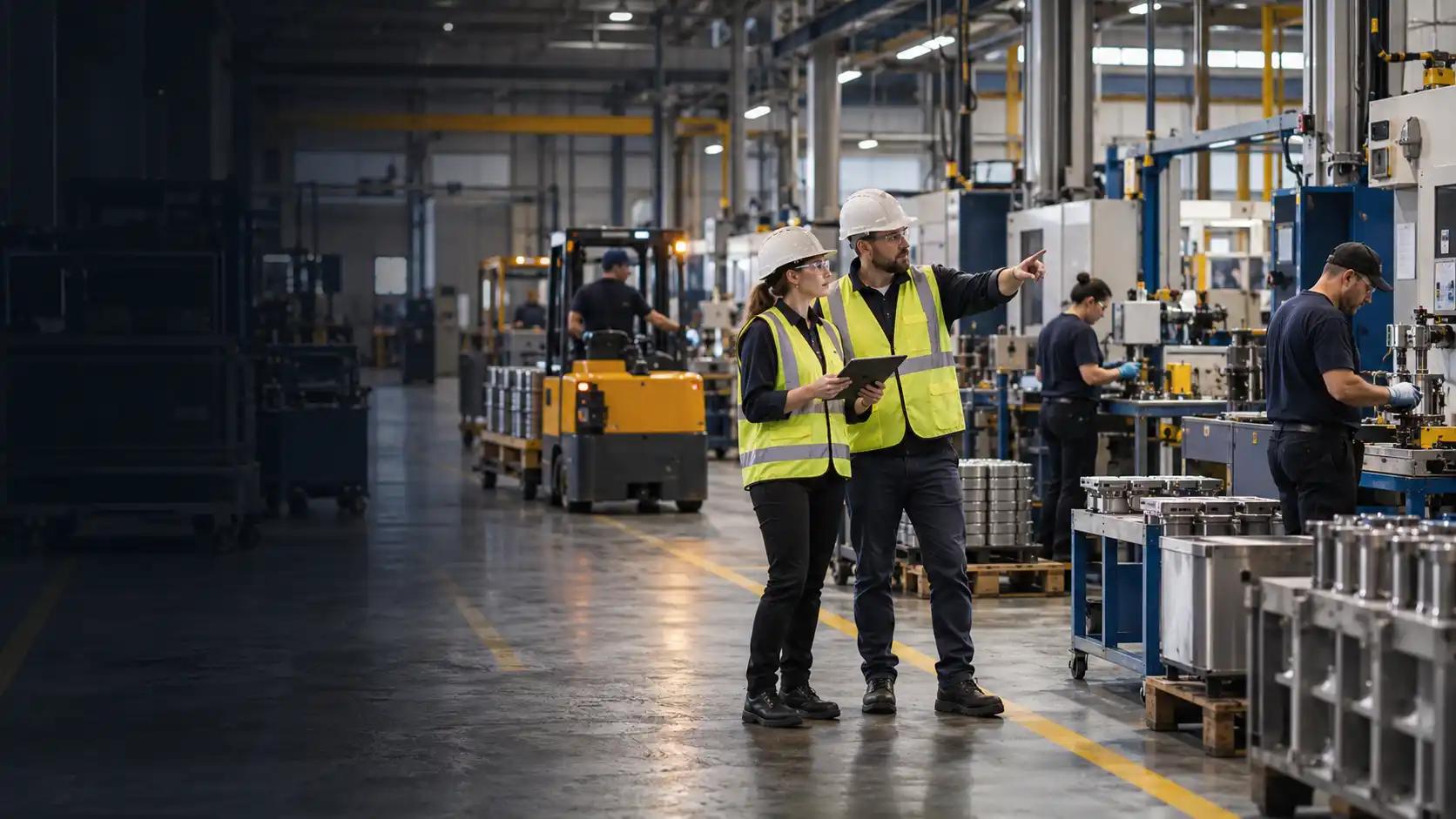
Plan the shift you will actually run.
We model the people, skills, and shared equipment behind the production plan—including the calls that overlap.
A crew can look sufficient on paper until a break, an absence, or two simultaneous calls for the same forklift or setter. Explore five resource decisions using the cards or arrows below.
Crew coverage
Shared equipment
Specialist calls
Breaks & absences
Skills flexibility
Compare crew sizes under the workload of each shift.
Measure the waiting caused by simultaneous calls.
See where a scarce expert is needed at the same time.
Test the handovers and absences behind the roster.
Test who can cover which task before adding training.
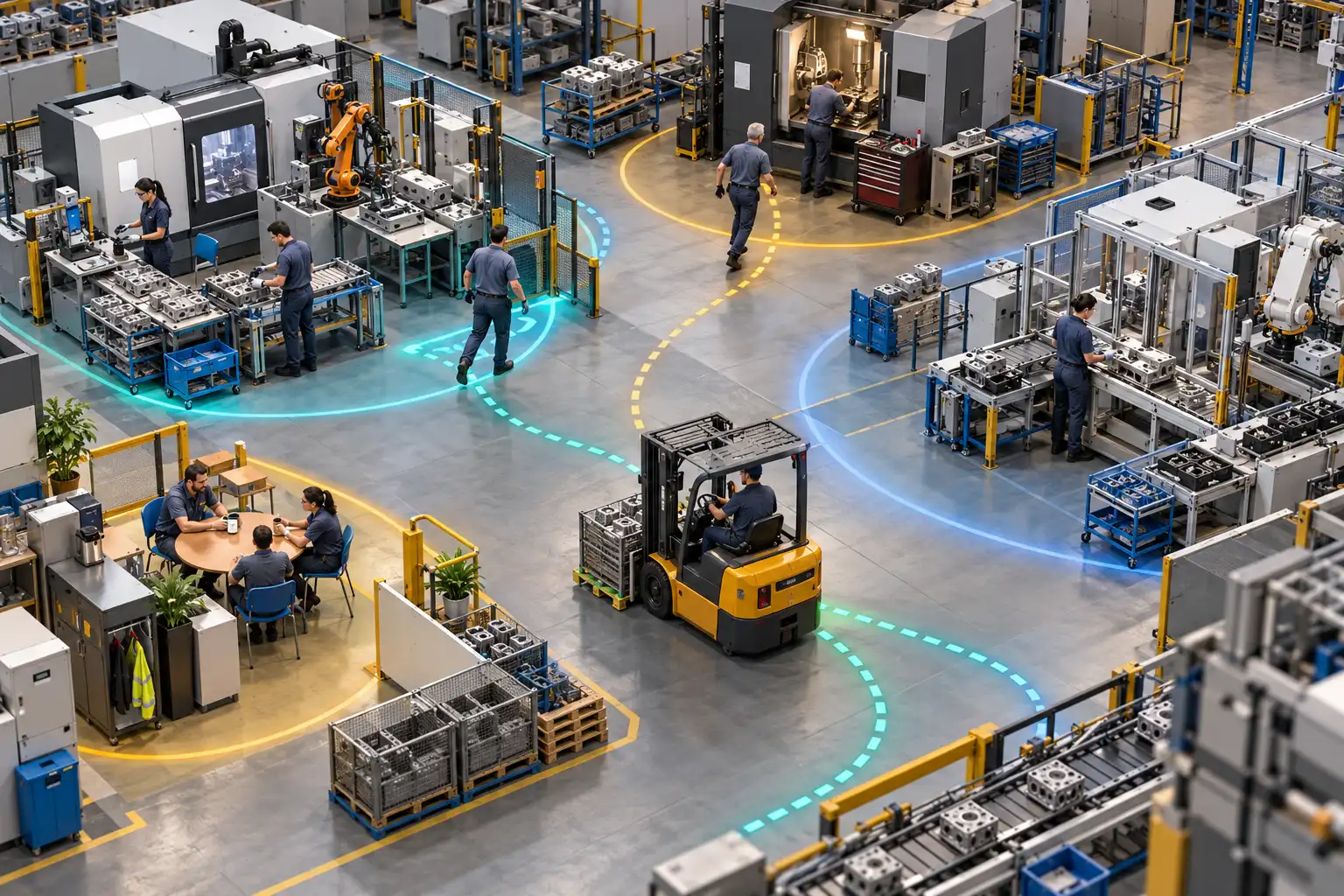
Explore all five challenges · Select a card or use the arrows
A resource study shows where capacity depends on the crew and shared equipment being available at the right moment.
Compare staffing options against the interruptions and workloads each shift faces.
Trace delays to forklifts, setters, inspectors, or other resources serving several lines.
Test which additional skills cover the most exposed tasks during absence or peak load.
Find the shifts and product mixes where the current plan is most likely to fall short.
Weigh more headcount, better assignment, and flexible skills with the same model.
A working simulation model + Scenario comparisons + Engineering recommendations
Compare crew sizes, shared equipment, and skill coverage across the shifts you actually run. We test allocation changes before adding headcount, training, or handling resources.
Explore our simulation project supportCompare crew sizes with the shift demand, interruptions, breaks, and absence patterns the operation sees. We assess when coverage falls short against the agreed output or service target, rather than sizing a roster from standard times alone.
Model competing calls for forklifts, setters, inspectors, cranes, or other shared resources across lines. We trace the resulting queues and compare dispatch and coverage policies to identify where sharing constrains output.
Represent the skills matrix and test which additional task coverage protects the operation during absence or peaks. We compare cross-training options on the same workload so training investment can be directed at the most exposed tasks.
We define the service or output target and candidate staffing policies. People, specialist skills, and shared equipment are modeled across the lines they support, so simultaneous requests and interrupted coverage are visible in the decision.
Typical inputs include station work content, shift demand, rosters, break and absence patterns, shared-equipment requests, resource travel times, and skills matrices. Coverage rules are represented explicitly rather than assuming every person can perform every task.
Depending on scope, receive crew and equipment scenario comparisons, shared-resource waiting analysis, and cross-training recommendations. Findings identify exposed shifts and mixes and show how each coverage option changes output or service performance.
With expert simulation consultation.
Tell us which shifts, shared equipment, or skills are under pressure. We’ll identify the coverage scenarios worth testing.