The process as it runs
Record how the work actually moves, including the steps nobody wrote down.
- Walk and map the real sequence
- Record rework and informal routes
- Separate value-adding from waiting
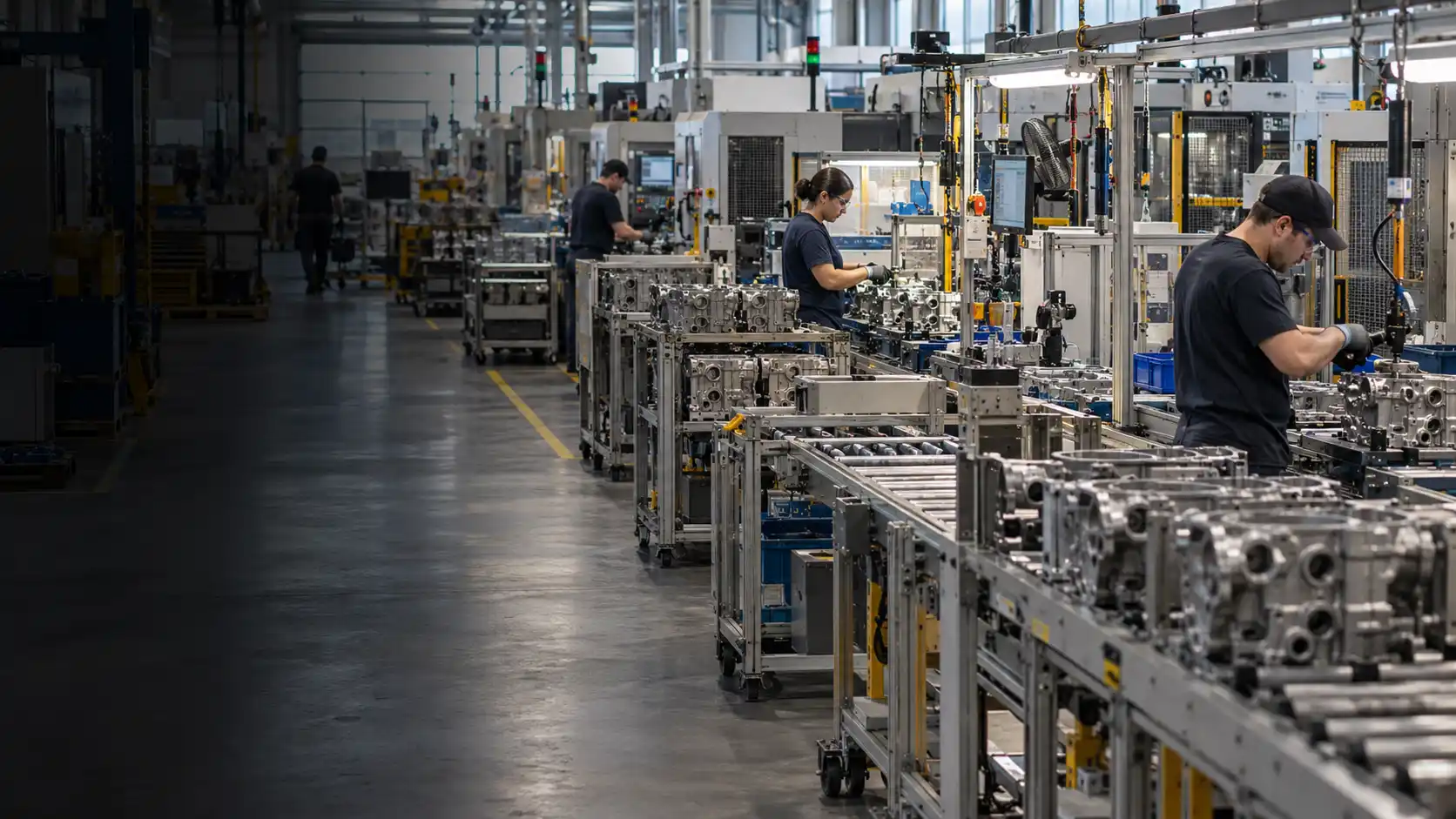
Remove what the process does not need.
Map the process as it actually runs, measure where time is really lost, and test a change against the whole flow before it is made.
An improvement at a station the line never waits for changes nothing. Explore five things a lean study has to settle before a change is worth making, using the cards or arrows below.
The process as it runs
Where time is lost
The constraint
Local versus whole flow
Holding the change
Record how the work actually moves, including the steps nobody wrote down.
Quantify where time goes instead of listing waste categories.
Identify which step actually limits output before anything is changed.
Test a proposed change against the whole flow rather than one station.
Agree the standard and the measure that shows it is still being followed.
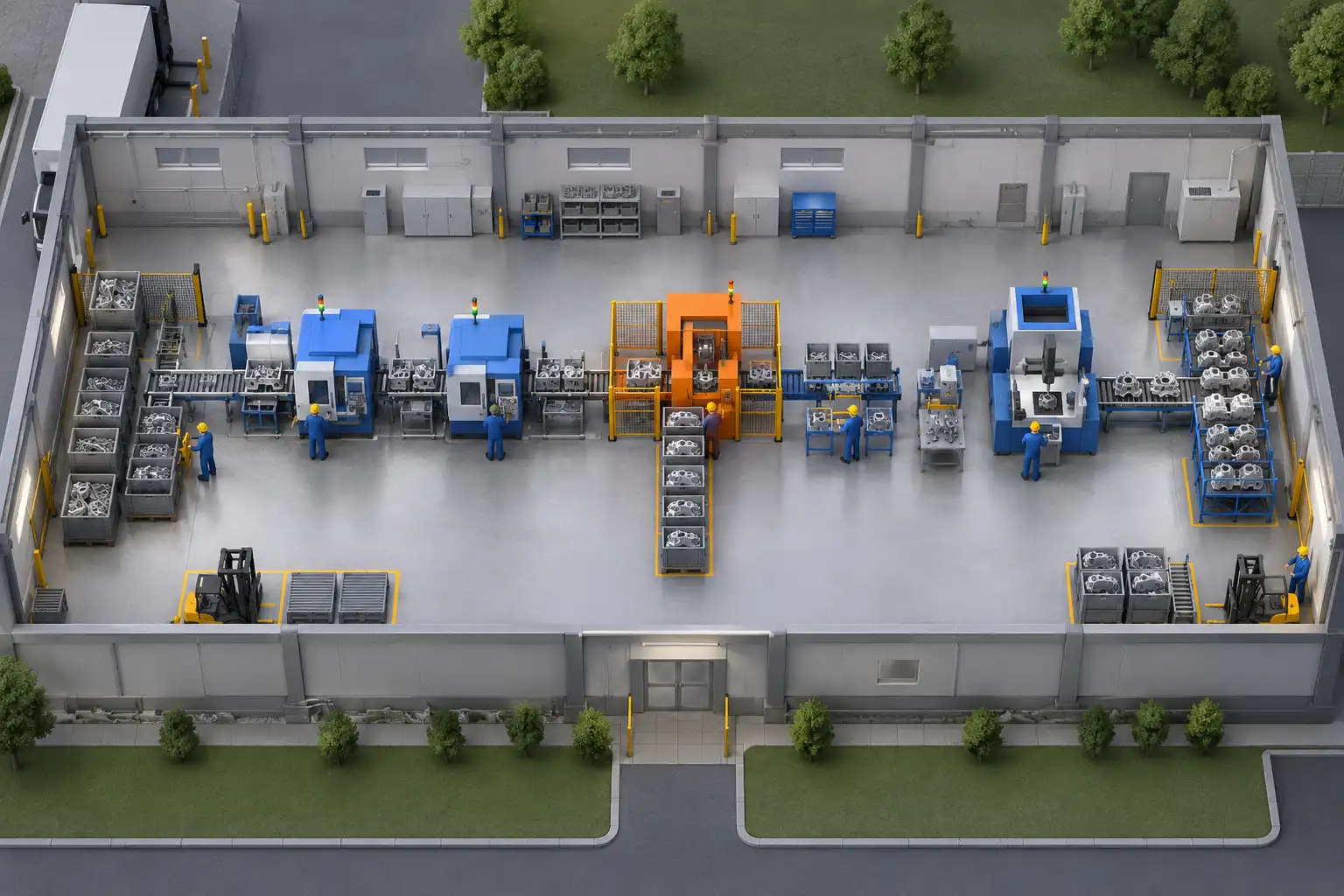
Explore all five challenges · Select a card or use the arrows
A lean study is worth doing when it ends with a change the flow can actually use, and a way of telling later whether it stuck.
How the work actually moves, including the steps that are not in the procedure.
Waiting, transport and rework measured and attributed, not listed as categories.
The step that sets output, confirmed under normal variation rather than assumed.
A proposed change evaluated against the whole flow before it is made.
The agreed standard written down with the measure that shows it is still followed.
Current-state process map + Measured losses and constraint + Tested improvement options
Map the process as it runs, measure where time is genuinely lost, and test a change against the whole flow before it is made. The aim is a smaller number of changes that survive contact with normal operation.
Explore our industrial engineering consultingWe record the real sequence by walking it, including rework loops, informal routes and the steps that never reached the procedure. A map drawn from documentation describes the process someone intended, which is rarely the one the improvement has to work on.
Waste categories are easy to name and hard to act on. We measure waiting, transport, handling and rework, attribute the time to a cause, and rank the losses by size so attention goes to the ones that change output rather than the ones that are most visible.
Output is set by one step at a time. We identify it, confirm it under normal variation rather than on a single good day, and check whether it moves as product mix or loading changes, because an improvement anywhere else leaves the result unchanged.
Where the change is significant, we evaluate it against the whole flow before it is made, usually in a model, so the downstream effect is visible. A gain at one station that the next step cannot absorb is not a gain, and it is cheaper to find that out beforehand.
Typical inputs are the process steps and layout, available cycle or activity times, downtime and changeover records, demand and product mix, and access to observe normal running. Where data is thin we say so and size the uncertainty rather than filling the gap silently.
We write down the agreed method and the measure that shows it is still being followed, and set a review point. Without that, a process returns to its previous behavior quietly, and the next study starts from the same place as this one.
With experienced industrial engineering support.
Tell us the process, where you think the time goes, and what you can measure today. We’ll set out what a lean study should cover and what it can reasonably settle.